











Twenty-Four Slots Between You and the Apocalypse
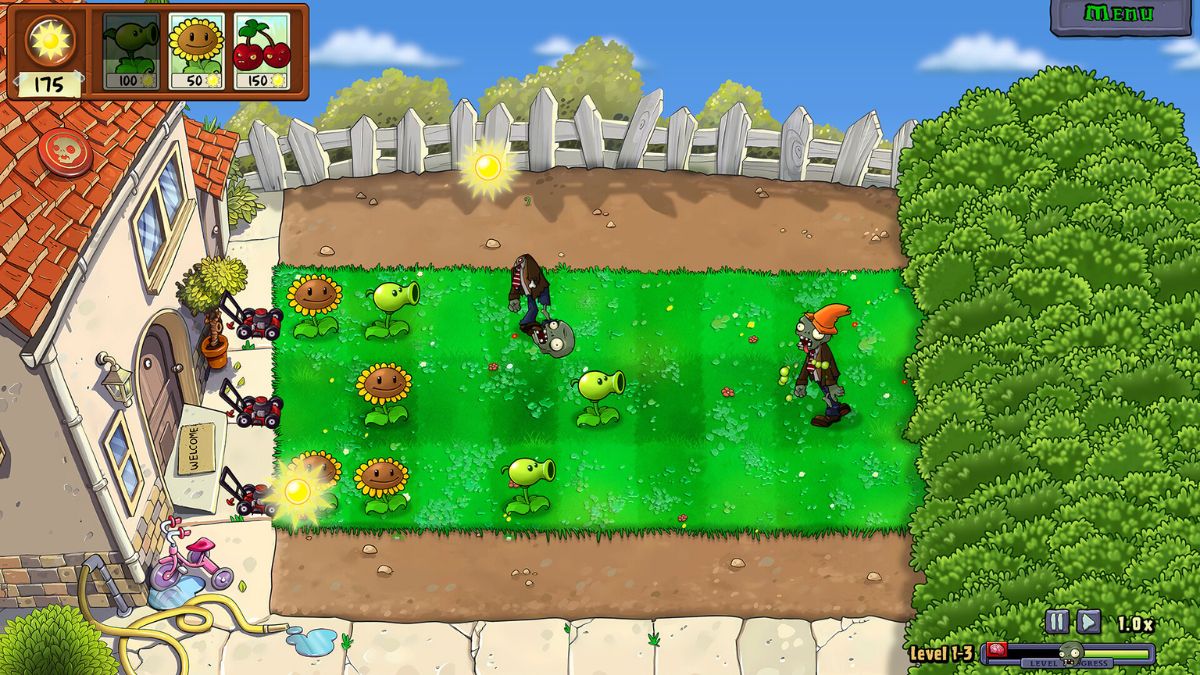
Twenty-four grid slots and one persistent resource — sun — stand between a suburban backyard and total zombie domination. In Plants vs. Zombies, each lane of the lawn becomes a puzzle you solve in real time: sunflowers generate income, peashooters hold the line, wall-nuts buy critical seconds, and cherry bombs vaporize columns of undead when everything else fails. PopCap’s original 2009 design remains one of the most precisely balanced tower defense games ever built, because each new plant expands your options without obsoleting what you already know.
Knowing Which Zombie Breaks Your Strategy
The zombie roster is where the design gets its teeth. Basic shamblers are warm-ups; Conehead and Buckethead variants demand more firepower in the same lane slot. Pole Vaulters leapfrog your front wall-nuts. Newspaper Zombies accelerate when angered. Football Zombies shrug off mid-tier plants entirely. Every new type is a quiet question: does your current setup handle this? Usually the answer involves one plant swap, one rerouted sun investment, and a narrow escape that turns into earned confidence by the next wave.
Why the First Lawn Is Never Your Best One
The genius of Adventure Mode is its pacing — one new plant or zombie per stage, so the learning curve never steepens into frustration. By the time fog rolls in on Night Lawn 4 or zombies emerge from the pool, you’ve already internalized the core loop deeply enough to adapt. Survival Mode and mini-games extend that mastery into pure pressure tests. The Zen Garden adds a collector’s layer between runs. Across every mode, the same sun-and-seed economy holds, forcing efficiency over brute force every single time.
Comments 0