










Running a Restaurant at the Bottom of the World
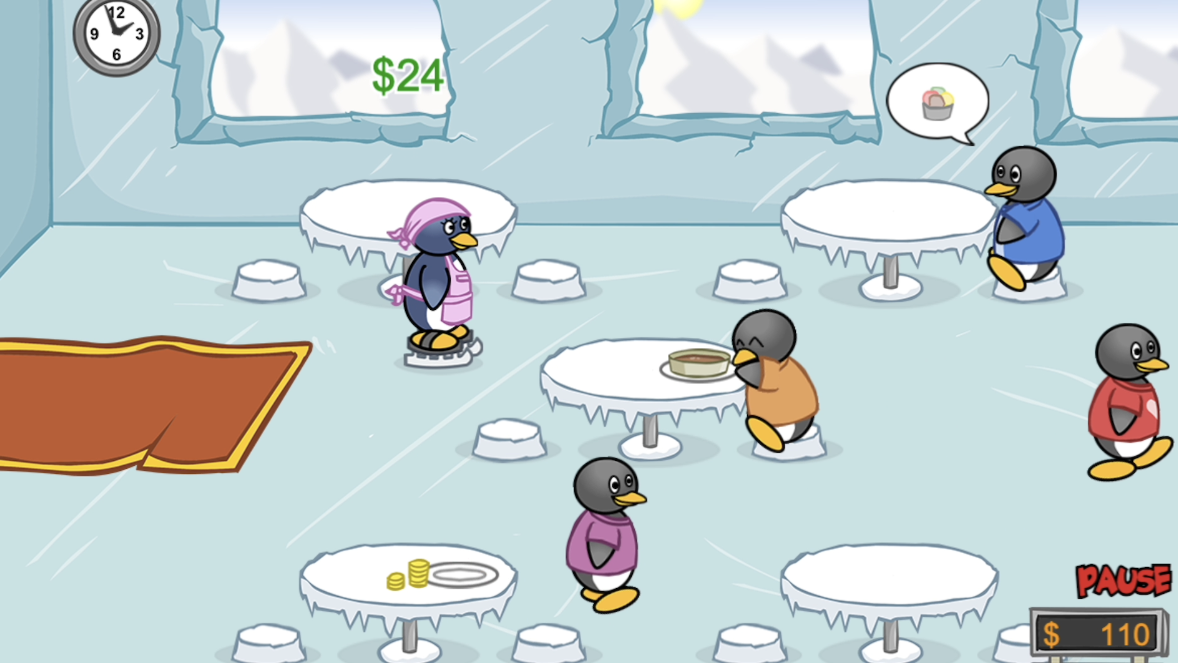
Four actions define every shift in Penguin Diner: click a penguin customer at the door to seat them, click their table to take the order, click the kitchen to retrieve it, click the table again to serve. That loop sounds simple — and it is, until four tables are occupied simultaneously and every customer’s patience bar is ticking down in parallel. Penguin Diner teaches restaurant economics through pressure: every action you take serves someone, and every second you’re idle costs a tip.
The Satisfying Crunch of a Busy Shift
Efficient routing matters more than speed. Standing between two tables lets you serve both without crossing the restaurant twice; positioning near the kitchen when orders are ready saves precious seconds. As the game progresses, more table types appear, customers’ patience bars shorten, and the revenue thresholds to clear each shift climb. Between levels, tips convert to upgrades — a faster kitchen, a larger seating area, decorations that subtly boost customer moods — each one shifting the calculus of the next shift.
Charming Stakes in a Tiny World
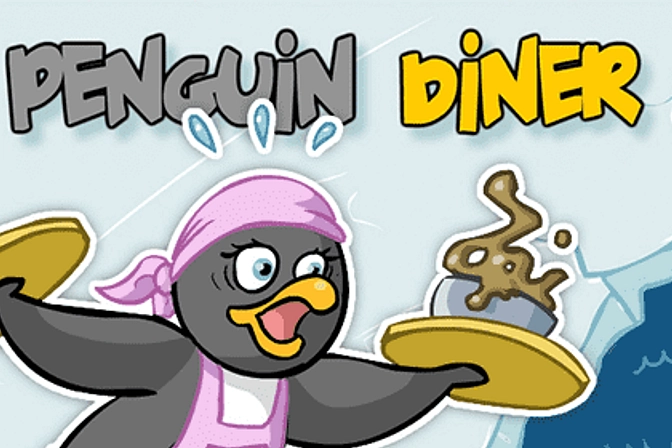
What gives Penguin Diner its staying power is how emotionally legible it makes customer satisfaction. Serve someone quickly and they beam; leave them waiting too long and they storm out, taking their tip with them. The Antarctic setting and waddling characters give the whole operation a warmth that makes caring about fictional penguin satisfaction feel completely reasonable. It’s a small world, but the stakes feel real from the first shift to the last.
Comments 0