











The Millimeter Gap Between Clean and Wrecked
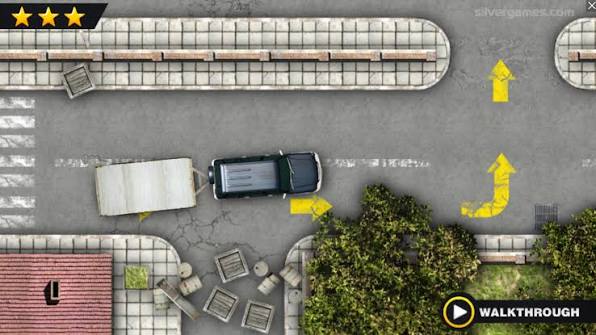
What makes Parking Fury 2 quietly compelling is how it reframes the most mundane driving task as a genuine puzzle. Every car park layout is a spatial problem — calculating turning radius, reading whether a gap is actually wide enough, deciding between a three-point turn and a sweeping arc that saves two seconds but clips a barrier. The top-down perspective gives you full situational awareness, but that information advantage disappears fast when the lot fills up and moving vehicles add dynamic obstacles to navigate around.
Patience as a Play Style
Parking Fury 2 rewards deliberate players who resist the urge to accelerate into tight corners. The game tracks contact: a single scrape against another vehicle or a barrier deducts points or ends the level, which means the fastest path isn’t always the correct one. Learning to use reverse efficiently, to read parking angles before committing, and to anticipate the car’s turning arc well ahead of the obstacle separates players who coast through early levels from those who master the later layouts without breaking a sweat.
Simple Controls, Escalating Spatial Complexity
The controls are stripped down to arrows or WASD, putting the entire burden of skill on spatial reasoning rather than finger dexterity. Later levels introduce time pressure, moving traffic, narrow slots at awkward angles, and multi-step parking sequences that require reversing into a spot after navigating a complex route through the lot. The difficulty curve is honest — each new challenge introduces exactly one more variable, building on what came before rather than introducing arbitrary chaos.
Comments 0