









A Morning Rush You’ll Keep Chasing to Nail
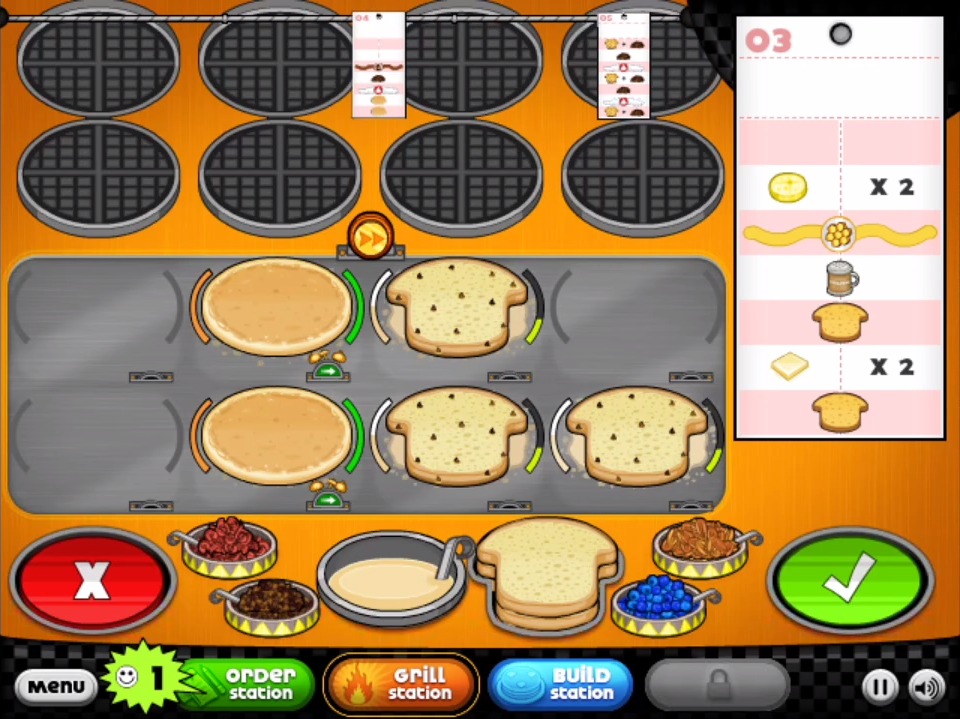
Flipline Studios built Papa’s Pancakeria around a deceptively precise loop: take the customer’s order at the counter, move to the grill to pour batter into specific shapes, watch the cook indicator to flip at the right moment, then carry the finished stack to the build station and add toppings in the exact sequence the ticket demands. Syrup lines, butter placement, and fruit arrangement all affect the customer’s happiness score. Miss the flip by a second and the pancake burns; miss a topping and the tip shrinks noticeably.
The Art of Serving Multiple Tables Without Losing Tempo
What transforms Papa’s Pancakeria from a casual pastime into something genuinely absorbing is the station management. While one pancake cooks, you’re back at the counter taking a new order; while a customer’s plate is being assembled, you’re checking if another stack needs flipping. The game teaches parallel processing through natural consequence — standing idle at one station means a customer’s patience bar draining at another. Tips accumulate into shop currency, funding upgrades that shorten wait times and unlock premium ingredients.
Regulars, Seasons, and the Satisfaction of Mastery
Over successive days, regular customers develop visible expectations — they’ve been happy before, so they’ll be harder to impress. Seasonal events introduce limited ingredients and holiday décor that keep the visual feedback fresh. The satisfaction here isn’t just mechanical; it’s the quiet pride of running a tight operation. A perfect serving day — every customer at five stars, the tip jar overflowing — lands with the same clean finality as solving a well-crafted puzzle.
Comments 0