











A 1980 Machine That Still Has Perfect Teeth
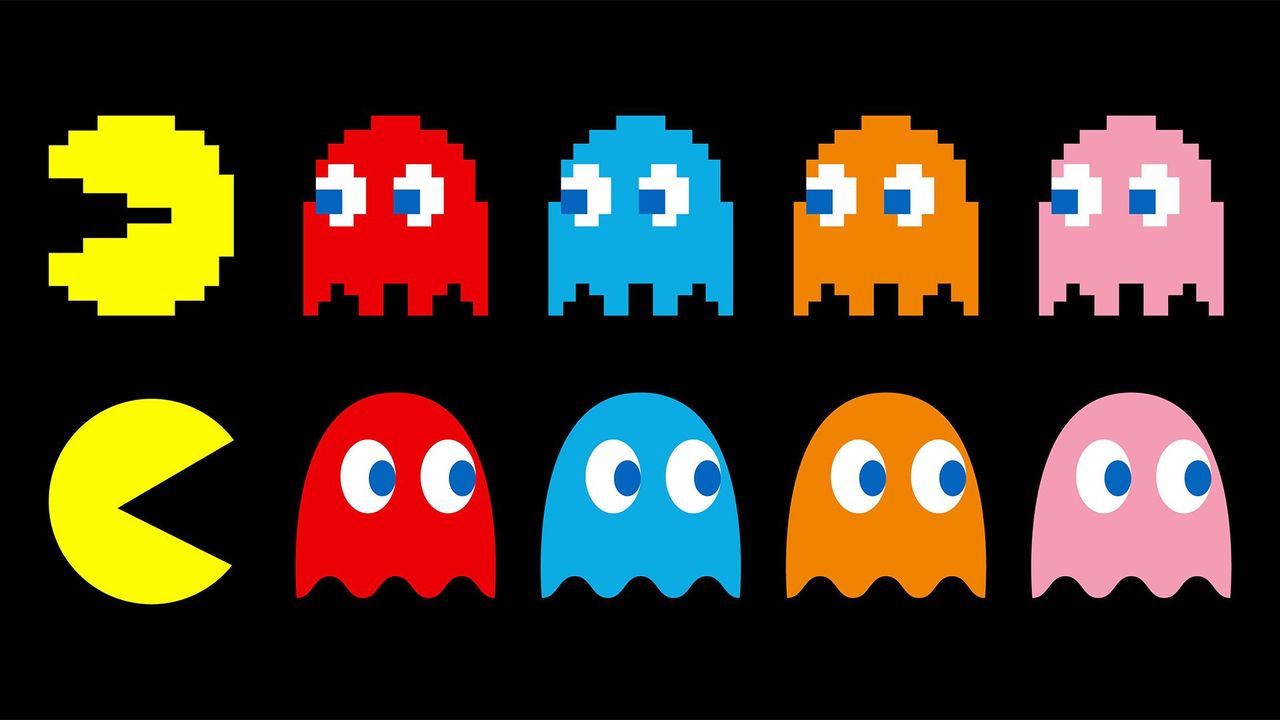
Designed by Toru Iwatani and released by Namco in 1980, Pacman became the first video game with a true protagonist — a round, hungry hero navigating 240 pellets through a 28-by-36 tile maze. What made it revolutionary wasn't the pellets but the ghosts: each AI personality is distinct. Blinky chases you directly, Pinky targets four tiles ahead of your nose, Inky uses a complex vector relative to Blinky's position, and Clyde — the wild card — chases until he gets close, then retreats to his corner.
Power Pellets and the Art of Turning the Tables
Four power pellets sit in the maze's corners, and eating one flips the entire dynamic: ghosts turn blue and flee, vulnerable to being eaten for escalating point bonuses — 200, 400, 800, 1600. But the window is brutally short, especially on later boards where ghosts flash back to normal almost immediately. A perfect game requires clearing all 256 boards with every ghost eaten on every power pellet for a maximum score of 3,333,360 — an achievement fewer than ten people have legitimately recorded.
Why Mechanical Elegance Outlives Every Trend
The tunnels on the left and right edges teleport you to the opposite side — and skilled players use them to break ghost formations and buy time. Fruits appear in the maze's center twice per board, offering bonus points. The difficulty climbs not through gimmicks but through tightening ghost speed and shrinking blue-ghost duration. Forty-plus years later, the game's loop — tension, reversal, near-miss — remains as sharp as the day the cabinet first lit up.
Comments 0