










Numbers That Tell You Everything — If You Listen
Each revealed square in Minesweeper carries a number that represents exactly how many mines border it. That constraint, multiplied across a grid of unrevealed tiles, creates a deductive logic puzzle of remarkable depth. The art is learning to cross-reference multiple numbers simultaneously — a "2" means nothing in isolation, but flanked by a "1" on one side and a "3" on the other, it pins mine locations with near-certainty. Skilled players scan for these constraint intersections rather than solving the board tile by tile.
Flagging Mines and Controlling Risk
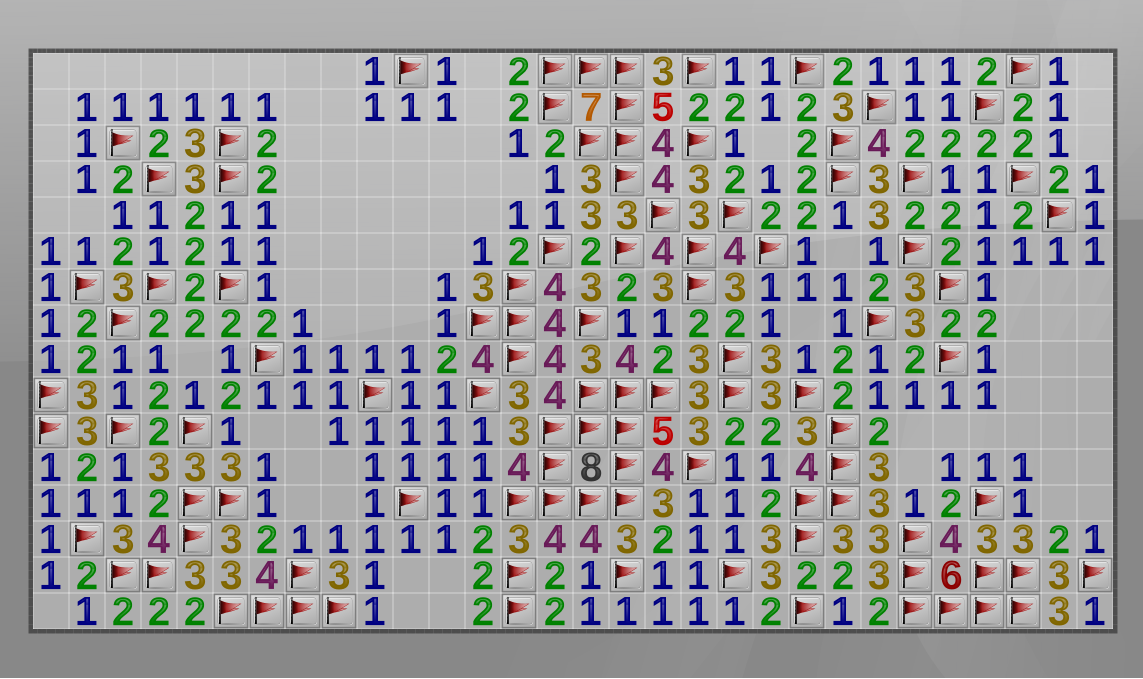
Right-clicking to flag suspected mines does more than mark danger — it lets you treat flagged cells as solved in subsequent deductions, reducing the unsolved space and simplifying adjacent logic. Strategic flagging turns a daunting full board into a set of smaller, manageable constraint problems. Some squares genuinely require a probability guess when deduction runs out, but experienced players minimize those moments through disciplined sequencing: always extract every certain conclusion before moving to uncertain territory.
Why This Thirty-Year-Old Puzzle Still Holds Up
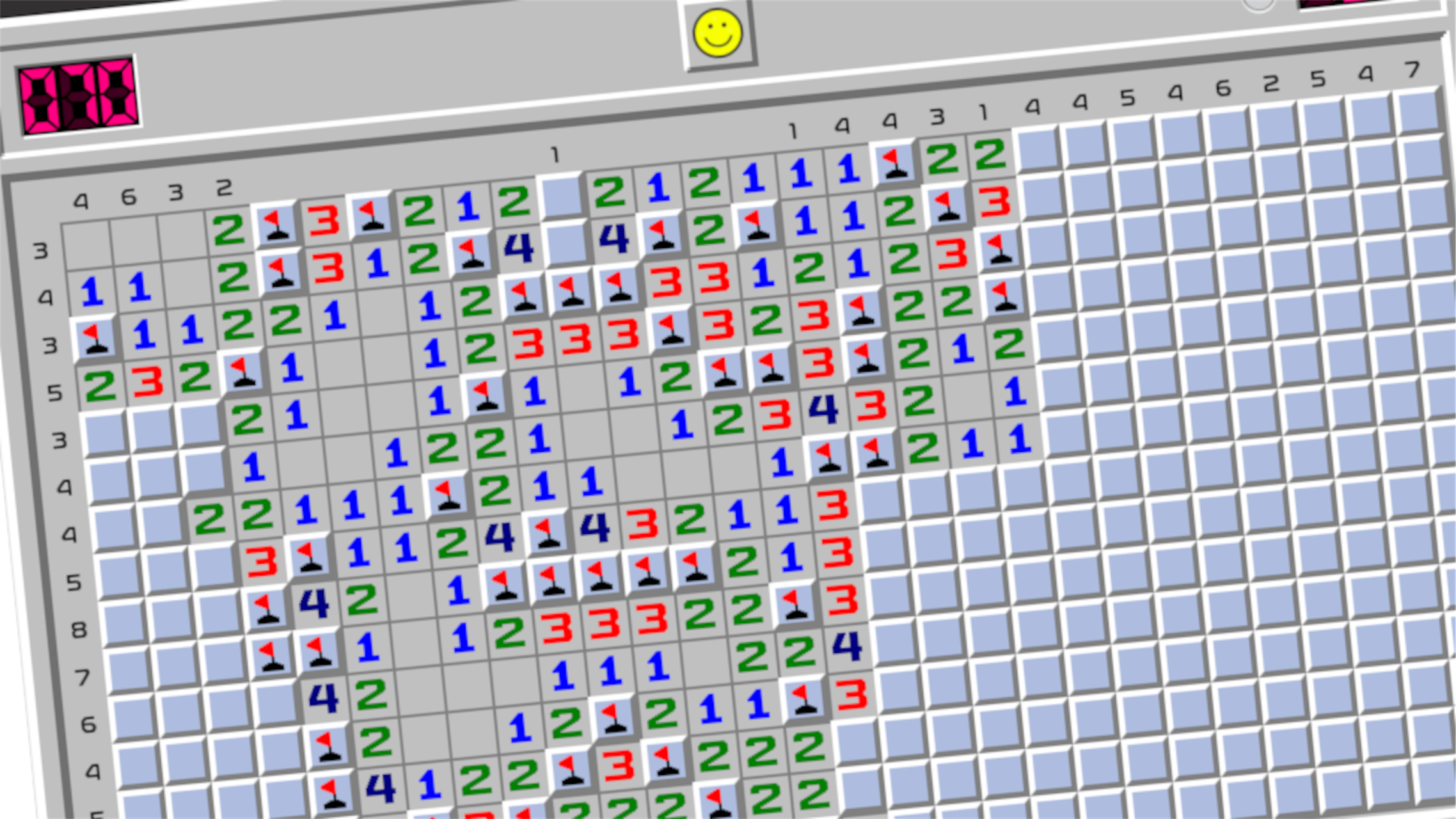
Minesweeper has survived decades precisely because its ruleset is perfect — simple enough to learn in two minutes, deep enough to reward years of practice. Speed records in competitive Minesweeper run under thirty seconds on expert boards, achieved through pattern recognition so refined that certain number configurations trigger immediate mechanical responses. Casual players experience genuine tension and satisfaction on beginner grids. The game scales with commitment without ever changing a single rule, which is a rare and valuable design quality.
Comments 0