










The Cannon Opened Up Everything
The shift from ramp to cannon in Learn to Fly 3 sounds like a small design change, but it fundamentally restructures what the game is. The ramp sent you forward; the cannon sends you up, into a vertical ascent toward space. That vertical orientation changes how equipment interacts — gliders behave differently when oriented upward, payloads affect the trajectory in ways that require rethinking from the second installment — and the result is a game that feels genuinely new rather than a refinement of the same loop. Light Bringer Games added three distinct modes, a more complex equipment hierarchy, and a narrative through-line that gives even the upgrade grind a sense of destination.
Three Modes, Three Different Games
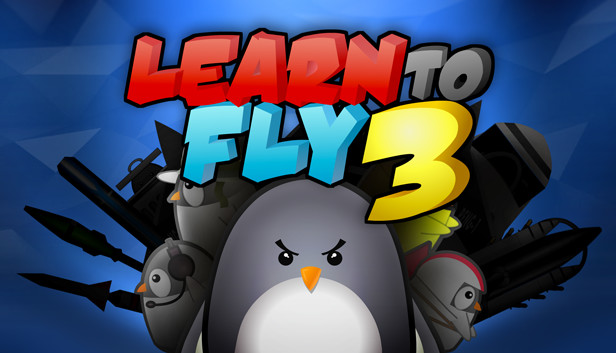
Story mode in Learn to Fly 3 follows the penguin’s determined push toward space with a series of challenges that guide the upgrade path, Classic mode returns to the pure distance-maximisation experience with no narrative scaffolding, and Payload mode introduces a new variable: carry an object to a target altitude, which changes which equipment is optimal and forces configurations that would never appear in a pure distance run. The three modes share an upgrade economy but produce sufficiently different gameplay that switching between them keeps the session variety high even deep into a playthrough.
When the Upgrade Tree Becomes Architecture
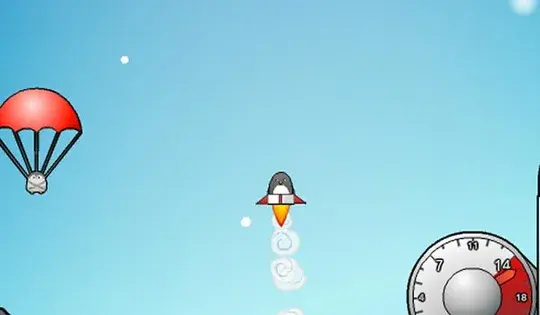
The equipment system in Learn to Fly 3 is the deepest the series has offered — stages, gliders, payloads, and boosters each with multiple tiers and interplay effects that make build optimisation a genuine sub-game. There is a version of this game you can play by just purchasing the highest-tier unlocks as they appear, and a version where you model how different configurations perform against the specific challenge you are chasing. The second version is considerably more interesting and rewards the kind of lateral thinking that the series has always encouraged: sometimes a low-tier item with a specific property outperforms the expensive obvious choice by a significant margin.
Comments 0