











No Cutscenes. Valve Taught the Shooter to Tell Its Own Story.
Black Mesa's tram sequence has no dialogue, no tutorial popup, no loading-screen interruption — it simply moves you through a functional research facility for three quiet minutes before everything goes catastrophically wrong. That choice defined Half-Life: Valve's 1998 shooter was the first to demonstrate that a first-person game could deliver a fully authored narrative without ever wresting control from the player. Gordon Freeman sees everything you see, knows nothing you don't know, and never speaks. The result is immersion that most games still fail to match.

Every Scientist Was a Clue Before There Were Dialogue Trees
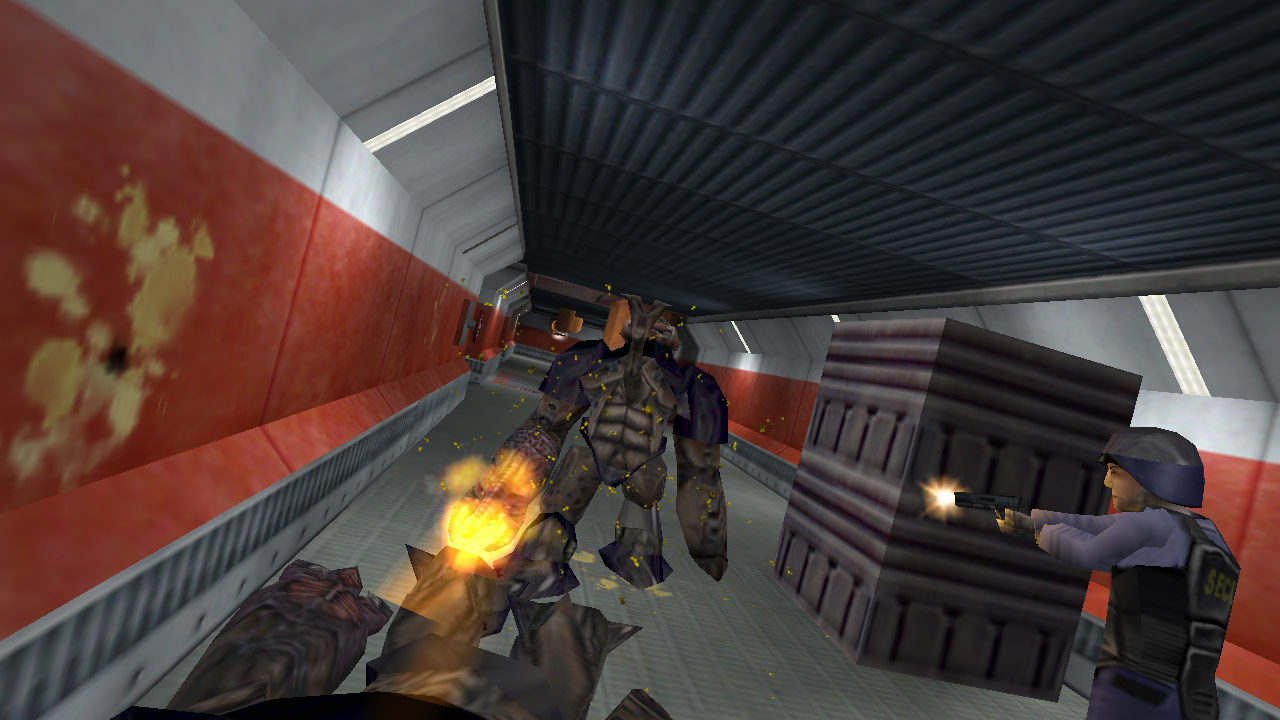
The Black Mesa facility isn't set-dressed — it's populated with scientists and guards who remember you across encounters, comment on what's unfolding around them, and die in ways that feel accidental rather than scripted. Alien species arrive through dimensional rifts that follow their own internal logic: headcrabs lobotomize, houndeyes hunt in packs, Vortigaunts coordinate attacks. Then the HECU marines arrive and the tone shifts entirely — soldiers who call flanks, flush hiding spots, and use grenades to force movement introduced AI behavior that genuinely shocked FPS players in 1998.
The Crowbar as a Thesis Statement
Gordon starts unarmed in a facility that never expected its researcher to become its only survivor, and the progression from improvised tool to full arsenal happens organically through environment rather than menu unlocks. The gauss cannon ricochets off walls and can kill you if misaimed in a corner. The snarks are living grenades that might turn on their thrower. Every weapon rewards specific situational knowledge and punishes players who treat Half-Life as a standard corridor shooter — which is exactly what it was built to retire.
Comments 0