







Every Trap Has a Tell — Find It and Move Through
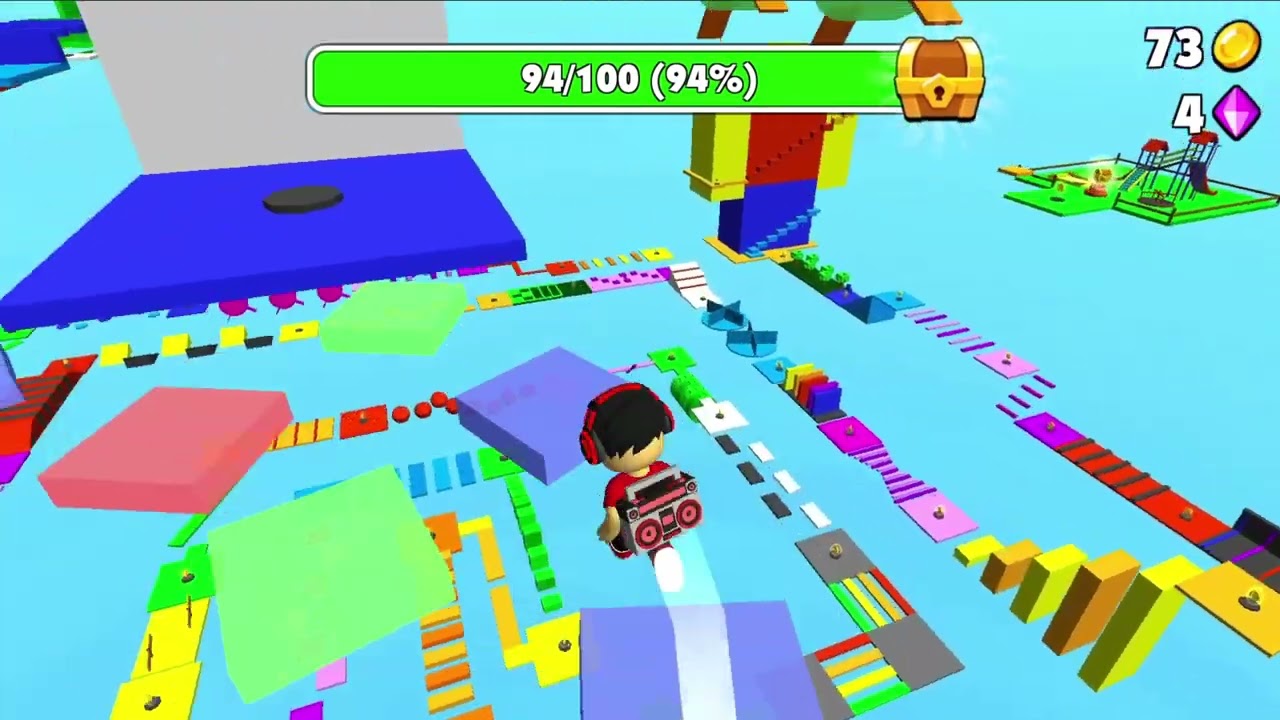
Fun Obby strings together obstacle courses built from spinning platforms, timed hazards, moving barriers, and gap sequences that demand both spatial precision and adaptable timing. The obby format — derived from obstacle courses popularised in block-building games — thrives on the contrast between sections that feel achievable and sections that require multiple attempts to decode. Each trap has a consistent mechanic once understood: the rotating beam always completes its arc in the same time, the rising platforms always cycle at the same speed. Recognising the pattern converts a frustrating death loop into a straightforward timing exercise.

Checkpoints and the Cost of Impatience
Checkpoint placement in Fun Obby creates meaningful decision windows. A checkpoint earned ten obstacles back is not close enough to make reckless approaches through the next section worth the risk of reverting — but a checkpoint right before a particularly demanding sequence invites aggressive attempts knowing that failure is cheap. The temptation after a long clean run is to accelerate through the section ahead; the correct instinct is to slow down precisely when momentum suggests speeding up, since most deaths come from overconfident movement through a section the player hasn’t fully read yet. Patience between checkpoints preserves progress that aggressive play frequently erodes.
Visual Reading and Spatial Confidence
Skilled obby players develop the habit of looking ahead — identifying the next two or three obstacles from current position rather than reacting to each new element as it becomes immediately relevant. Seeing a rotating platform in the near distance while still clearing a gap allows the player to time the approach rather than arriving at the platform at an awkward phase of its rotation. Jump arcs can be adjusted midflight in some sections; knowing that the landing zone is clear before leaving the ground eliminates the most common source of last-moment hesitation that causes mistimed landings. Reading forward converts reactive play into deliberate navigation.
Comments 0